
We engineer silence from what was thrown away
Founded in Nairobi in 2025, Green Sound Solutions exists because two waste streams — plastic and noise — turned out to solve each other.
A question nobody had a good answer to
Kenya exports plastic flake for pennies and imports acoustic foam at a premium. The same material, crossing the same port, in opposite directions.
It took eighteen months in a workshop to close that gap. PET, it turns out, makes an outstanding acoustic fibre — porous enough to trap sound energy, rigid enough to hold a panel shape, and stable enough to last decades on a wall.
Every panel we ship is plastic that will not reach a river, and a room that is measurably easier to work, learn or rest in. We don't think of that as a trade-off. We think of it as the whole point.


Vision and mission
Our vision
To be Africa's definitive name in sustainable acoustic architecture — proving that environmental liabilities can become premium, high-performance building materials.
Our mission
To manufacture superior acoustic panels from 100% recycled plastic, giving architects and builders materials that silence noise while speaking volumes for the planet.
Four moments that made the company
The question
Two engineers ask why Nairobi's PET waste leaves the country as low-grade flake while acoustic foam arrives as a premium import.
First fibre
A workshop extruder produces the first usable acoustic fibre from washed bottle flake. Early panels test at NRC 0.71.
Green Sound Solutions
The company is founded, collection partnerships are signed with five cooperatives, and the range reaches NRC 0.92.
The target
5,000 tonnes of plastic processed a year on solar-powered lines, serving the whole of East Africa.
Six principles we actually apply
Not a poster in the corridor — these are the rules we use when a decision is genuinely difficult.
Circularity
Nothing we make is designed for landfill. Panels come back to us at end of life and re-enter the line.
Evidence
Every acoustic claim is lab-measured. If we can't test it, we don't print it.
Fair sourcing
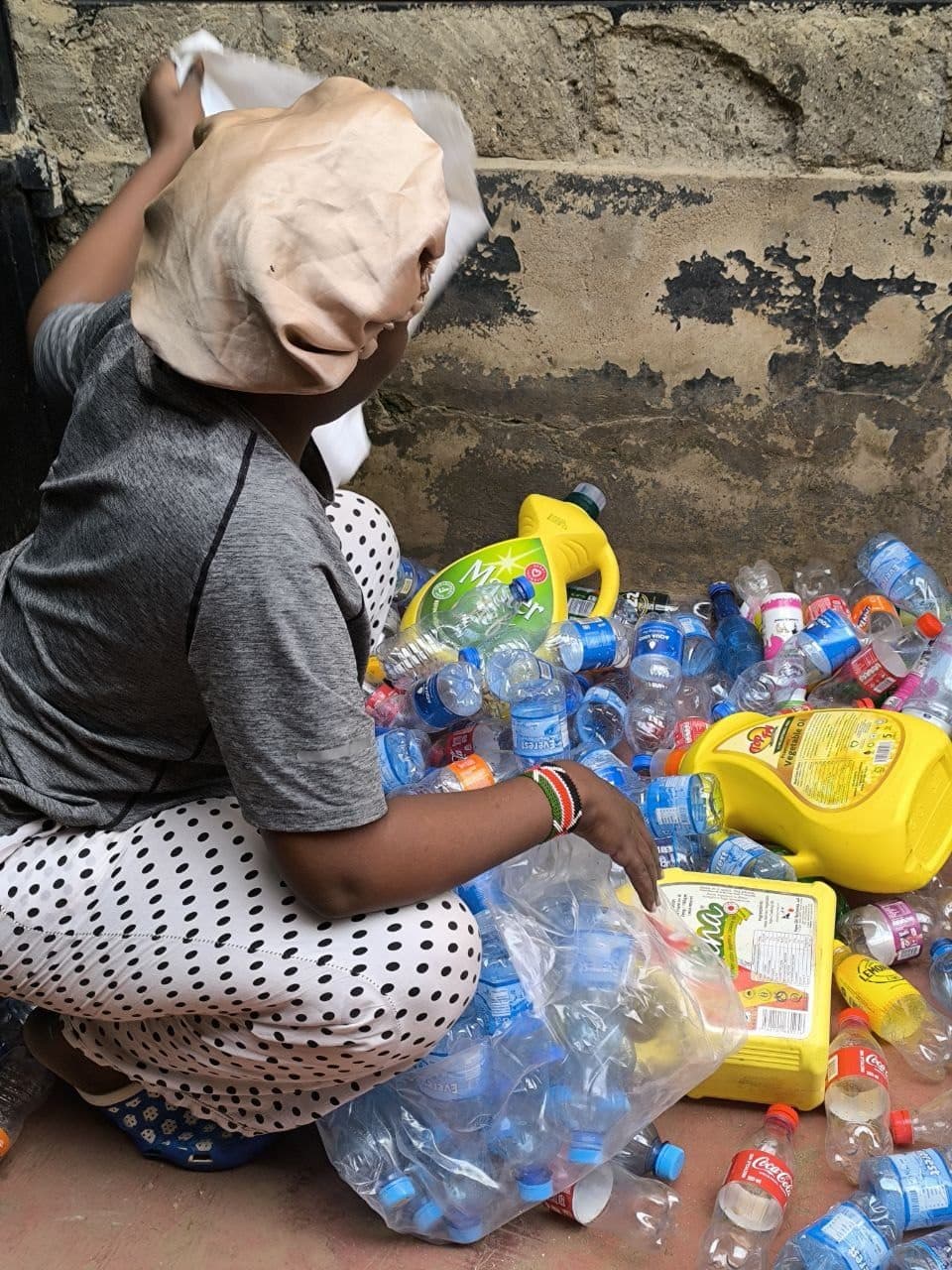
We buy directly from waste-picker cooperatives at above-market rates, paid same day.
Craft
Recycled should not mean second-rate. Our finishes are specified by architects on merit.
Local first
Kenyan feedstock, Kenyan manufacturing, Kenyan jobs. The value stays where the waste was.
Stewardship
We measure our own footprint and publish it, including the parts that still need work.
Making the case beyond the workshop
Circular manufacturing only scales if the people writing policy and funding buildings understand it. So we show up — on stages, on panels and in the rooms where the green transition gets argued out.




Every panel is a diversion
We don't only reduce noise. We reduce the volume of waste suffocating landfills — and we can tell you exactly how much, per square metre.